CPU Raytracer
A C++ implementation of a basic raytracer with global illumination rendering
Project Overview
This C++ raytracer simulates the physical properties of light and its interaction with 3D objects, implementing a global illumination rendering algorithm that accurately models light transport.
Raytracing Algorithm
Simulates bouncing of light rays with recursive tracing for reflections and refractions.
Geometric Primitives
Supports spheres, planes, cylinders, and complex models like the Stanford Bunny.
Lighting & Material
Implements ambient, diffuse lighting with material properties including reflection.
Example Scenes
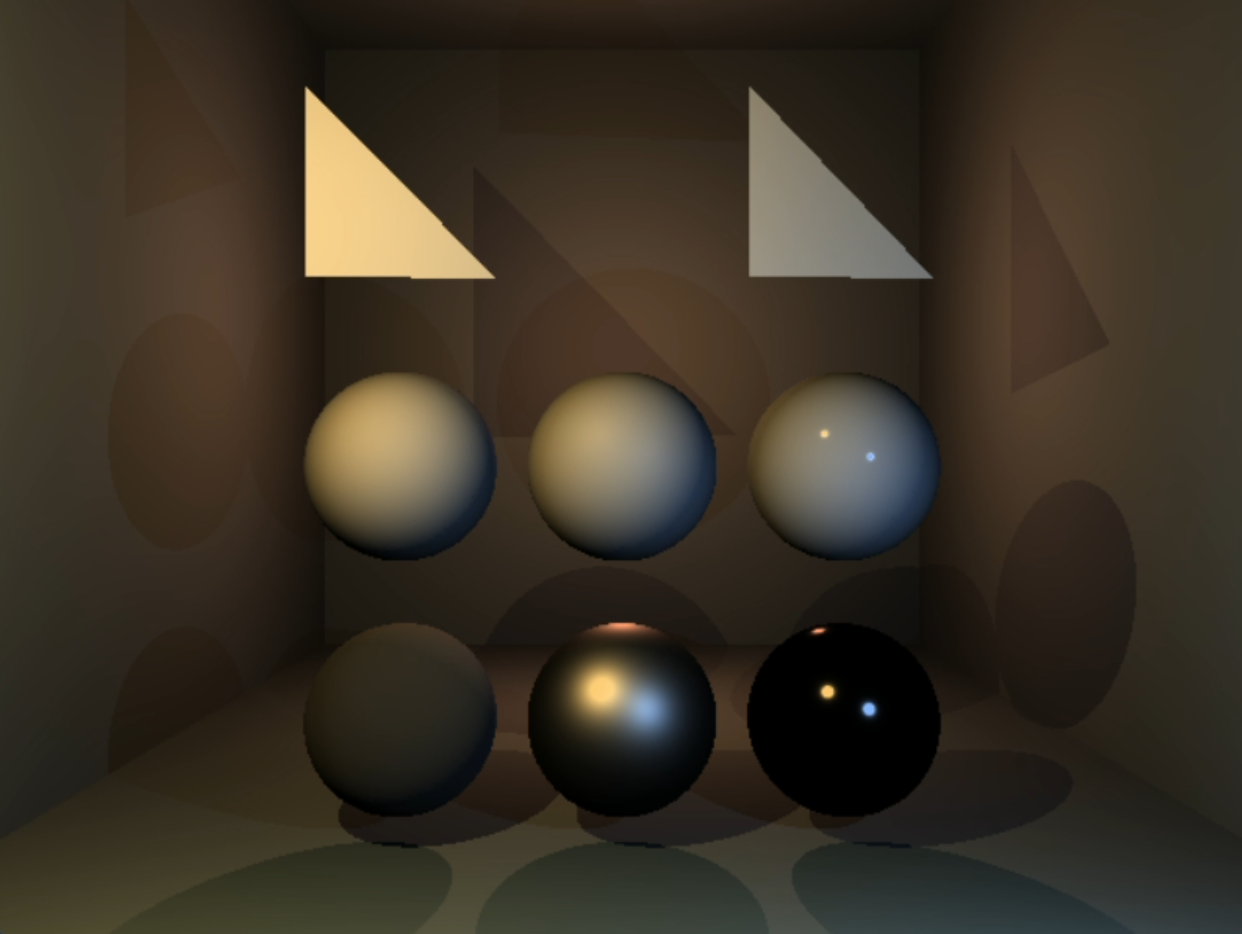
The Raytracing Journey
Developing this CPU raytracer was an exciting dive into the fundamentals of computer graphics. Implementing the core algorithms from scratch provided deep insights into light transport, material properties, and computational optimization.
Technical Challenges Overcome
- Implementing efficient ray-object intersection algorithms
- Optimizing recursive ray tracing for complex scenes
- Developing physically accurate material and lighting models
- Handling complex geometry like the Stanford Bunny
- Balancing rendering quality with performance constraints
Despite the computational demands of CPU-based raytracing, the project demonstrates impressive visual results and serves as a solid foundation for understanding modern rendering techniques.
Technical Highlights
Core Raytracing Features
- Recursive ray tracing with configurable depth
- Support for multiple geometric primitives
- Physically-based material properties
- Ambient and diffuse lighting models
- Basic anti-aliasing implementation
Scene References
Libraries & Tools
- C++17 Standard
- CMake Build System
- STL for core functionality
- GLM for vector mathematics